

Acidic soil
Some plants prefer acid soil. The right level depends on the species you want to grow.


Take control of your soil health with VivaTest Soil pH Test Strips. Designed for fast, reliable at-home testing, these easy-to-use strips help you optimise soil pH for healthier plants, lawns, vegetables, and gardens.
Key Benefits
Fast and accurate results with a clear colour change
Wide pH range from 3.5 to 9.0 suitable for most plants
Easy to use with no meters, batteries, or calibration required
Reliable soil testing to support healthy plant growth
Great value with 100 test strips included
Product Description
VivaTest Soil pH Test Strips are calibrated specifically for soil testing, providing quick and reliable pH readings so you can make informed decisions about soil care.
Understanding soil pH helps plants absorb nutrients more effectively. With these simple test strips, you can check soil conditions in seconds and adjust watering, fertilising, or soil treatments as needed.
Suitable for home gardeners, lawns, vegetable patches, flower beds, pots, planters, and greenhouse use, VivaTest makes soil testing simple and accessible.
How to Use
What’s Included
100 soil pH test strips
Test tube
Measuring spoon
Colour comparison chart
Instruction guide
Product Specifications
pH range: 3.5–9.0
Test type: Soil pH test strips
Results time: Approximately 10 seconds
Quantity: 100 test strips
Storage: Store in a cool, dry place
Helpful Resources
Learn more about soil pH levels, ideal ranges for plants, and how to improve soil conditions in our guide:
Understanding Soil pH and Plant Health
Clear pricing, free UK delivery and UK-based customer support.
VivaTest · Garden essentials
A little soil knowledge makes planting decisions clearer. Check acidity or alkalinity with a prepared soil sample, a test strip and the supplied colour chart.
From vegetable plots to flower borders, use your result to understand the ground you grow in and choose plants suited to it.

Prepare first, then read. The box specifies air-drying the soil and a 2-hour settling period. The 10-second reading time applies after dipping the strip, not to the whole test.
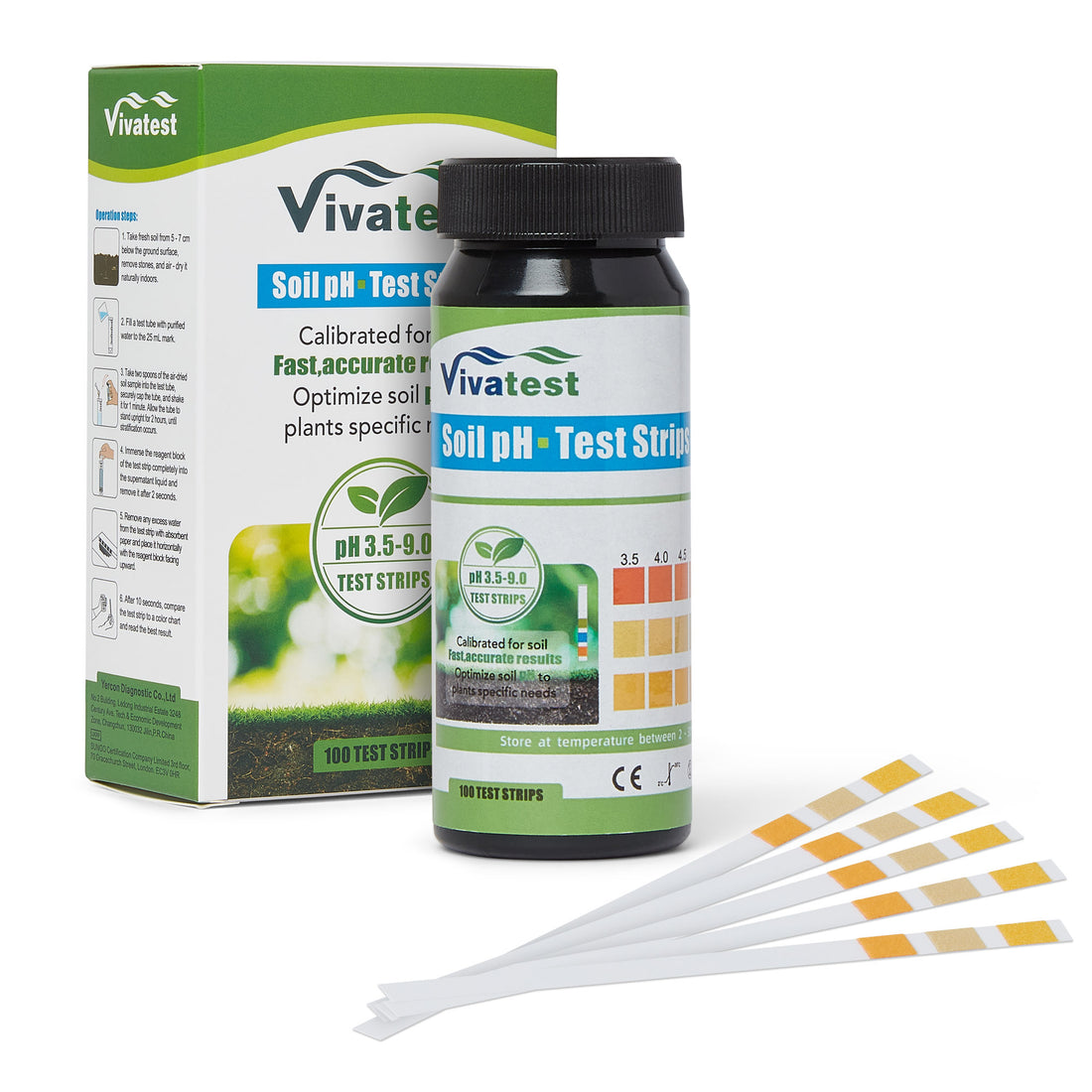
Inside your kit
Strips, sampling accessories and a comparison chart in one pack. Keep a record as you check different growing areas over time.
You also need: purified water, a timer and absorbent paper. The supplied instructions take priority if your pack differs.
Understand the number
pH describes acidity or alkalinity. This kit covers pH 3.5–9.0; neutral is pH 7.0.
Number guide only. These colours are illustrative: read your strip against the chart supplied with your kit.
Some plants prefer acid soil. The right level depends on the species you want to grow.
The neutral point on the pH scale. It is not a universal target for every plant.
Often associated with chalky or lime-rich ground. Choose plants that suit your conditions.
pH is one part of the picture. It can affect nutrient availability, but these strips do not measure nutrient levels, moisture, contaminants or overall soil fertility.
Plant with your soil in mind
Use your reading alongside the growing advice for the plant you have chosen. Here are three examples to put the numbers into context.
These acid-loving fruit bushes prefer soil in this range. Check the ground before choosing a planting spot.
A useful general-purpose reference for mixed planting. Acid-loving species can need a different range.
Often suits these conditions, with full sun and good drainage. pH alone does not determine where it will thrive.
Examples are general plant preferences, not strip colour references or instructions to add a soil treatment. Check the species or cultivar and its other growing needs.
From sample to reading
Prepare the soil first, then test the clear liquid above the settled sample. The directions on your supplied pack always come first.
Settle after mixing
Dip the reagent pads
Wait before comparing
Take soil from 5–7 cm below the surface. Remove stones and let it air-dry naturally indoors.
Fill the tube to 25 ml with purified water. Add two supplied spoonfuls of dried soil, cap and shake for 1 minute. Leave upright for 2 hours to separate.
Immerse the reagent pads fully in the clear upper liquid, above the sediment. Remove the strip after 2 seconds.
Remove excess liquid using absorbent paper as instructed. Lay the strip horizontally with pads facing up. After 10 seconds, compare with the supplied chart.
Allow enough preparation time. Air-drying and settling are separate from the short strip-reading stage. Do not push a dry strip straight into soil or skip the settling period.
Make every check more useful
A named location, a consistent method and a short note make it easier to compare your results over time.
A lawn, vegetable plot and flower border can differ. Label each sample so you know which result belongs to which place.
Lime, fertiliser or organic matter added within the previous three months can make a reading misleading. Avoid adjusting soil from one unexpected result.
Use the stated water amount, sample preparation and reading time. Keep unused strips dry and the bottle firmly closed.
A little more clarity
Practical answers before your first sample and after your first reading.
Ask VivaTest about your kitIt gives a colour-based indication of soil acidity or alkalinity within pH 3.5–9.0. It does not measure nitrogen, phosphorus, potassium or other nutrient concentrations.
No. Prepare the air-dried soil and purified-water mixture using the kit instructions, allow it to settle and dip into the clear liquid above the sediment.
No. The box specifies air-drying the soil, shaking the prepared mixture for 1 minute and allowing it to stand for 2 hours. After a 2-second dip, the strip is compared with the chart after 10 seconds. Allow for the full preparation process.
Treat the result as an approximate indication, rather than an exact decimal value. Compare it carefully with the supplied chart in clear light. Repeat with a fresh strip if uncertain; detailed soil analysis can help when a result will guide a significant treatment decision.
These strips are designed for soil testing. Use a test made for the specific water or other sample you want to check. A soil pH reading does not establish whether water is safe to drink.
First compare the reading with your plant’s needs and confirm an unexpected result. Treatment choice and quantity depend on the soil and the product used. Follow suitable horticultural advice and the treatment label; a pH strip alone cannot calculate a dose.
Keep growing your knowledge
Explore the meaning of soil pH and find practical information to help you plan your next check.

Around the home & garden
A separate kit for checking free chlorine, total alkalinity and pH in pool or spa water.
Explore the kit →Contact our UK team for help with the product and its supplied instructions.
General gardening information, separate from the directions for your kit. Refer to your supplied pack for the test method.