

Acidity or alkalinity
An approximate urine pH reading. Diet and sample handling can influence the result.


Monitor Your Pet’s Health at Home with Professional Urine Test Strips
VivaTest Pet Urine Test Strips provide a fast, reliable and convenient way to monitor your dog or cat’s health from the comfort of your home. Designed for early detection of common urinary and metabolic conditions, these veterinary-grade urinalysis strips help identify potential issues before symptoms become serious.
Regular testing can support proactive pet care and reduce costly vet visits by identifying abnormalities early.
Key Benefits
✔ Multi-parameter testing – Screen for multiple health indicators in one simple test
✔ Early detection support – Helps monitor kidney function, urinary tract health and metabolic changes
✔ Fast results – Clear colour chart results within seconds
✔ Veterinary style testing – Professional quality strips suitable for routine monitoring
✔ Easy home use – No specialist equipment required
✔ Suitable for dogs & cats
What Can These Test Strips Help Monitor?
• Urinary tract health
• Kidney function indicators
• Possible diabetes markers
• Hydration levels
• Protein abnormalities
• General metabolic health signals
These strips are ideal for routine wellness checks, senior pets, pets with existing conditions or post-treatment monitoring.
How to Use
Collect a fresh urine sample from your pet.
Dip the test strip briefly into the sample.
Remove and wait the specified time.
Compare the colour pads to the results chart provided.
Results are easy to interpret and provide a useful indication of when veterinary advice may be required.
Product Specifications
• Quantity: 50 test strips
• Suitable for: Dogs & Cats
• Storage: Keep sealed in a cool dry place
• Use: Veterinary home health screening
For a full step-by-step guide on how to test your pet’s urine and understand results, please visit our
Pet Urine Testing Resource Guide:
Complete Guide for Dog & Cat Owners
This convenient test kit allows fast screening of key urine markers to help you keep track of your dog or cat’s wellbeing without the stress of a vet visit.
✔ High-quality pet urine test strips
✔ Multiple health parameters tested in one strip
✔ Clear colour comparison chart included
✔ Easy step-by-step instructions
✔ Fast results in around 60 seconds
✔ Suitable for dogs and cats
✔ Ideal for routine health monitoring
Simply collect a fresh urine sample, dip the strip briefly, wait for the recommended time and compare the results with the colour chart provided.
✔ Individually sealed urine test stripsVivaTest · Pet care
A simple way to record colour-based urine readings at home, ready for a more informed conversation with your vet.
Clear collection tips, timed readings and a chart supplied with the bottle help you know what to note — and when to ask for advice.

Part of a care conversation. Home strip readings do not diagnose a condition or replace a veterinary examination. Your pet’s symptoms matter even when a strip looks normal.
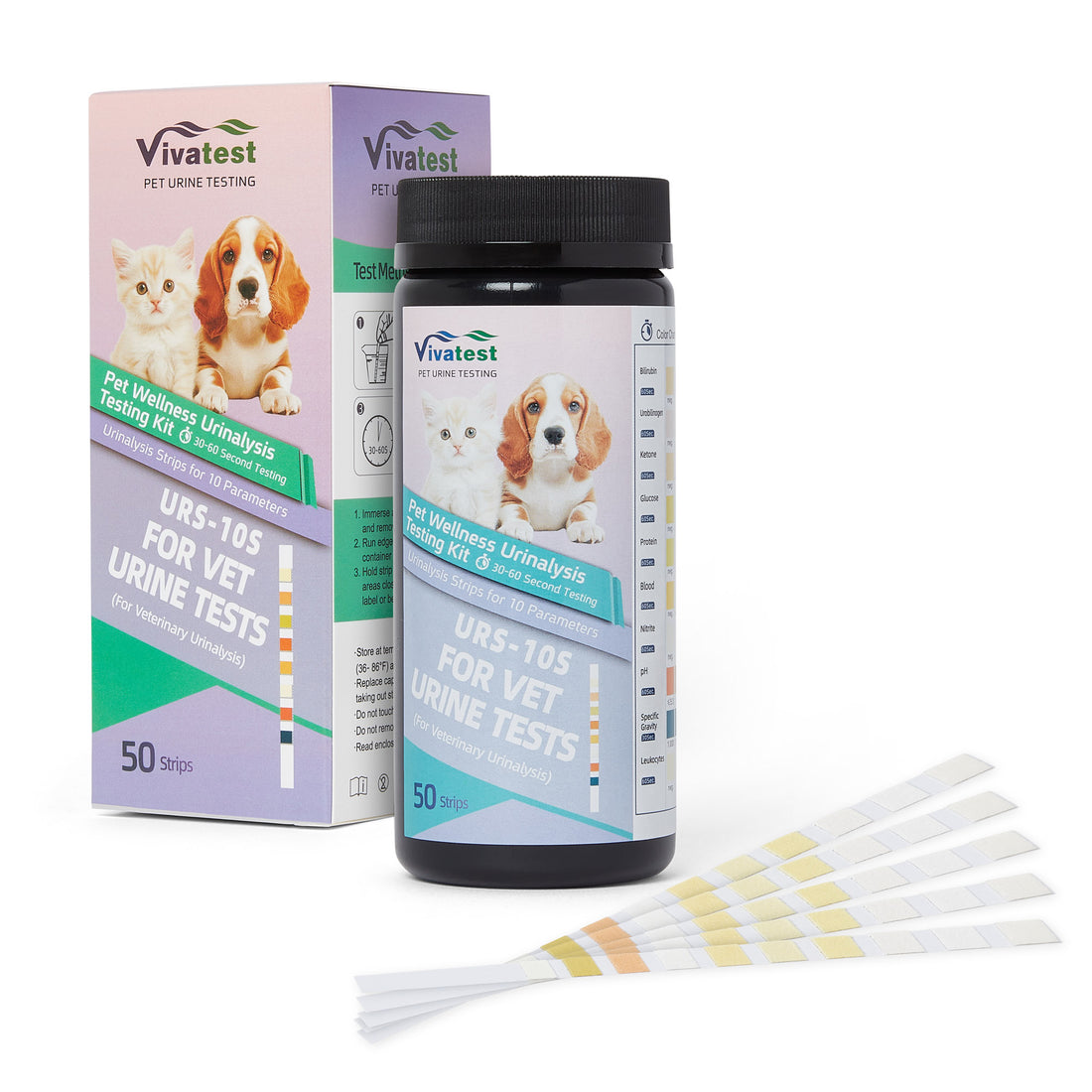
Inside your pack
Keep the bottle, its chart and the supplied directions together, so every reading has the right reference.
You also need: a clean collection container, a timer and a way to note the result. For cats, suitable non-absorbent sample-collection litter may help. Collection accessories are separate from this strip pack.
Understand the pads
These six chemical markers are commonly considered in veterinary urine dipstick analysis. Each is one piece of information for your vet, rather than a diagnosis on its own.
An approximate urine pH reading. Diet and sample handling can influence the result.
A screening reaction mainly to albumin. A vet considers it alongside urine concentration and other findings.
Checks for glucose in the sample. A positive reaction needs veterinary interpretation and does not establish diabetes.
Responds to certain ketones. It does not measure every ketone or explain why they are present.
Can react to red cells or blood-related pigments. It cannot identify the source of a positive result.
A pigment reading whose meaning differs between dogs and cats. Ask your vet to interpret it.
Read against your bottle. Use the chart supplied with your own pack, at each pad’s stated time, to compare the actual strip.
The URS-10S pack also lists leukocytes, nitrite, specific gravity and urobilinogen. Their presence on a strip does not mean they are all dependable health measures for dogs and cats.
Leukocyte and nitrite pads are unreliable in veterinary samples and should not be used to confirm or exclude a urinary infection. Specific gravity should be assessed with a veterinary refractometer, not the strip pad. Urobilinogen has limited diagnostic usefulness in these species.
Veterinary urinalysis can also include sediment examination and other tests. Discuss unusual readings or symptoms with your vet.
Gentle collection, useful samples
Fresh urine and a clean, rinsed, dry container help reduce contamination. Follow your vet’s collection instructions if they have asked for a sample.
From sample to notes
Use a freshly collected sample and the directions on your supplied pack. Reading too early or too late can change what you see.
Check the expiry date, prepare your timer and take one strip. Close the bottle promptly without touching the reagent pads.
Immerse the pads for 2 seconds, as shown on the current pack. Remove the strip and drain excess urine against the container rim as instructed.
Keep the strip horizontal to reduce liquid running between pads. Compare each pad at its own stated reading time.
Match to the supplied bottle chart in good light. Record the reading and your pet’s symptoms, then dispose of the used strip.

Read the right pad at the right time. The current bottle labels the six chemical markers explained above for a 60-second reading. Other labelled pads have their own timings and veterinary limitations. Your supplied chart takes priority; do not use one blanket 30-second reading for the whole strip.
Their routine tells a story
Pair any strip readings with what you notice day to day. Contact your vet about a change in drinking, toileting or comfort, even if the strip appears unchanged.
Note increased thirst, more frequent trips, accidents or changes in urine appearance.
Tell your vet about pain, straining, blood in urine or a pet that seems unwell.
Record the collection time, test time and readings. Include current medicines and any changes your vet has asked you to monitor.
Straining with little or no urine? Contact your vet promptly. If your dog or cat cannot pass urine, seek emergency veterinary help immediately; do not wait for a test result.
PDSA advice if your pet cannot pee →
A little more clarity
Practical answers to help you use the kit thoughtfully and know its limits.
Read the pet urine guideNo. They cannot confirm or rule out a UTI. Leukocyte and nitrite strip pads are unreliable in dogs and cats. A vet may need a fresh sample for sediment examination, culture or other tests.
No. Some problems do not produce a clear dipstick change. Contact your vet if your pet has symptoms, and seek emergency help if they cannot pass urine.
Ask your vet whether home testing is useful for your pet and what schedule to follow. There is no single testing interval for every dog or cat. Keep any agreed check-ups and tests.
No. Strip specific gravity is unreliable for veterinary assessment. Your vet uses suitable methods, such as refractometry, and interprets urine concentration alongside examination and other results.
They are single-use strips supplied together in a bottle, not individually wrapped. Close the cap promptly and keep unused strips dry. Follow the expiry date and storage instructions on the pack.
Do not change treatment or a prescribed diet based on a strip alone. Record the result and ask your vet what it means for your pet.
Helpful next steps
Keep product guidance and trusted sample-collection advice within easy reach.
Contact the VivaTest team for product and instruction questions. For symptoms, diagnosis or treatment, contact your veterinary practice.
Further reading to explain urinalysis. Follow your supplied pack for the test method and your vet’s advice for your own pet.